In industrial manufacturing, the selection of Welding Machine depends on factors like workpiece material (steel, aluminum, stainless steel), thickness, production efficiency, and weld quality requirements. Below are the main types of Welding Machine widely used, along with their core characteristics and typical industrial applications:
1. Shielded Metal Arc Welding (SMAW) Machine (Stick Welding Machine)
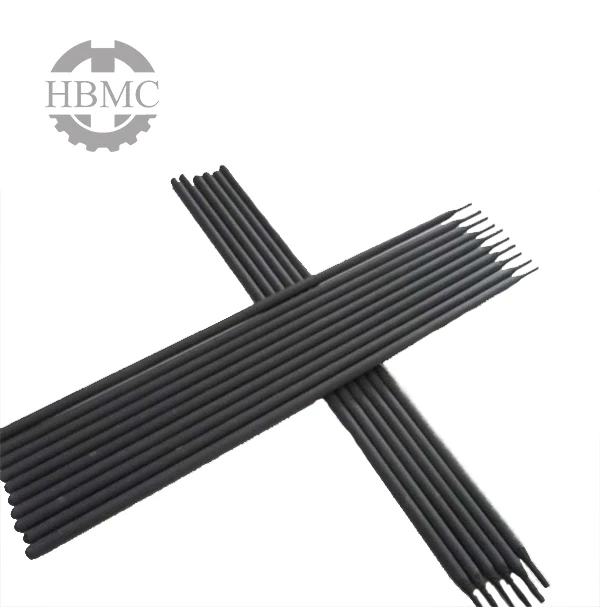
The SMAW Machine is one of the most versatile and cost-effective options in industrial settings, relying on a consumable flux-coated electrode to create an arc between the electrode and workpiece.
Key Features: No need for external shielding gas (the flux coating melts to form a protective gas and slag layer), simple structure, low equipment cost, and strong adaptability to harsh environments (e.g., outdoor construction, rusty workpieces).
Limitations: Lower welding speed, higher skill requirements for operators (to control slag removal), and less suitable for thin materials or high-precision welds.
Industrial Applications: Heavy machinery manufacturing (e.g., excavator frames), construction steel structure welding (e.g., bridge girders), pipeline repair, and shipbuilding (thick hull plates).
2. Gas Metal Arc Welding (GMAW) Machine (MIG Welding Machine)
The GMAW Machine uses a continuous solid wire electrode fed through a welding gun, with external shielding gas (e.g., argon, CO₂, or argon-CO₂ mixtures) to protect the weld pool from atmospheric contamination.
Key Features: High welding speed (suitable for mass production), smooth weld beads, low slag generation, and good adaptability to both thin and thick materials. It can be semi-automatic (operator controls the gun) or fully automatic (integrated with robotic arms).
Limitations: Relies on shielding gas (not ideal for windy outdoor environments), and requires careful wire feeding system maintenance.
Industrial Applications: Automotive manufacturing (e.g., body panel welding, chassis assembly), sheet metal fabrication (e.g., stainless steel cabinets), aluminum alloy processing (e.g., aircraft parts), and electrical appliance production.
3. Gas Tungsten Arc Welding (GTAW) Machine (TIG Welding Machine)
The GTAW Machine uses a non-consumable tungsten electrode to generate an arc, with shielding gas (typically pure argon) to protect the electrode and weld pool. Filler metal is added manually or automatically if needed.
Key Features: Exceptional weld quality (clean, precise, and with minimal defects), no slag, and ability to weld a wide range of materials (including aluminum, titanium, stainless steel, and copper). Ideal for thin materials and critical joints.
Limitations: Slow welding speed (low productivity for large-scale projects), high operator skill requirements, and higher equipment cost.
Industrial Applications: Aerospace and aviation (e.g., turbine blades, aircraft fuel tanks), medical device manufacturing (e.g., stainless steel surgical instruments), nuclear industry (pressure vessel joints), and high-precision tooling (e.g., mold repair).
4. Flux-Cored Arc Welding (FCAW) Machine
The FCAW Machine is a variation of GMAW, using a tubular flux-cored wire (instead of solid wire). The flux inside the wire melts to form shielding gas and slag, eliminating the need for external shielding gas in some cases (called "self-shielded FCAW").
Key Features: High deposition rate (faster than SMAW and GMAW for thick materials), good penetration, and suitability for outdoor or windy conditions (self-shielded type). The slag layer also improves weld bead shape.
Limitations: More slag to remove than GMAW, and the flux-cored wire is more expensive than solid wire.
Industrial Applications: Heavy-duty manufacturing (e.g., construction equipment frames, mining machinery), large-scale steel structures (e.g., stadiums, high-rise buildings), and offshore oil platform welding.
5. Submerged Arc Welding (SAW) Machine
The SAW Machine uses a bare wire electrode, with the entire arc and weld pool submerged under a layer of granular flux. The flux melts to form a protective slag and gas, while unused flux can be recycled.
Key Features: Extremely high deposition rate (ideal for thick materials, 10mm+), deep penetration, low operator skill requirements (automated process), and minimal spatter or fumes.
Limitations: Only suitable for flat or horizontal welds (difficult for vertical/overhead positions), and requires a flat workpiece surface to hold the flux.
Industrial Applications: Shipbuilding (hull plate 拼接), pressure vessel manufacturing (e.g., oil storage tanks), heavy steel fabrication (e.g., crane beams), and railway track welding.
6. Resistance Welding Machine
Resistance Welding Machines use electrical resistance heat generated at the contact point of two workpieces (clamped under pressure) to melt and join the metal, without needing electrodes or shielding gas. Common subtypes include spot welding, seam welding, and projection welding.
Key Features: Ultra-fast welding speed (milliseconds per joint), no filler material or flux, and high automation potential (easily integrated into production lines).
Limitations: Limited to thin sheet materials (typically <3mm for spot welding), and requires precise pressure and current control to avoid weak joints.
Industrial Applications: Automotive manufacturing (e.g., spot welding of car body panels), electrical component assembly (e.g., wire harness connections), and appliance production (e.g., stainless steel sink seams).
7. Laser Welding Machine
Laser Welding Machines use a high-energy laser beam (e.g., fiber laser, CO₂ laser) to melt and join metals, offering extreme precision and minimal heat input.
Key Features: Narrow heat-affected zone (HAZ) (reduces material distortion, critical for thin or heat-sensitive parts), high weld strength, and ability to weld small or complex joints (e.g., micro-components). Can be automated with robotic systems.
Limitations: High initial equipment cost, sensitivity to workpiece surface cleanliness (oil/dust affects laser absorption), and limited penetration depth for thick materials (compared to SAW).
Industrial Applications: Electronics manufacturing (e.g., smartphone battery tabs, microchip packaging), medical devices (e.g., titanium implants), aerospace (lightweight alloy components), and jewelry making (precious metal joining).
Each type of Welding Machine addresses specific industrial needs—for example, SAW dominates heavy thick-plate welding, while GTAW and laser welding are preferred for high-precision, critical applications. The choice ultimately depends on the manufacturing process, material properties, and quality standards of the end product.