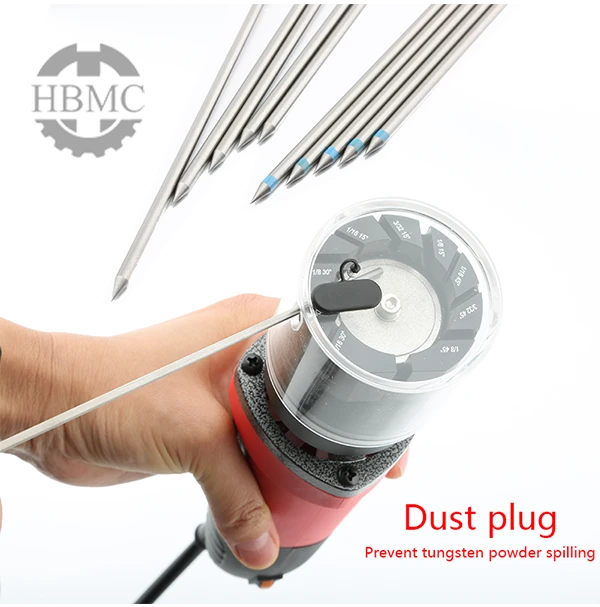
The dust collection system in a Tungsten Electrode Grinder is a critical safety and performance component—its primary role is to capture and contain tungsten dust and abrasive particles generated during grinding, preventing these hazardous materials from contaminating the workplace or endangering operators. Tungsten dust, in particular, poses unique health and safety risks (unlike standard metal dust), making effective dust collection non-negotiable for TIG welding shops. Below is a detailed breakdown of its core functions and how it enhances workplace safety:
1. Core Role: Capture Tungsten Dust and Abrasive Particles
During tungsten electrode grinding, the abrasive wheel (e.g., diamond or CBN) removes tiny shavings of tungsten (0.1–10 micrometers in size) and wears down slightly, releasing abrasive dust. The dust collection system targets these particles through two key mechanisms:
Suction-based capture: Most systems use a built-in fan or external vacuum to draw air (and entrained dust) through ports near the grinding wheel. The ports are strategically positioned to cover the "dust zone"—the area where the wheel contacts the tungsten—ensuring particles are captured at the source before they become airborne.
Filtration and containment: Collected dust passes through a high-efficiency filter (e.g., HEPA filter, rated to capture 99.97% of particles ≥0.3 micrometers) that traps tungsten and abrasive particles. The filtered air is then exhausted back into the workplace (for internal systems) or outside (for external vacuums), while the trapped dust is stored in a sealed bin for safe disposal.
This process prevents dust from settling on tools, workbenches, or equipment—and, more critically, from being inhaled by operators.
2. How It Improves Workplace Safety: Mitigating Health Risks
Tungsten dust is the primary safety concern addressed by the collection system—long-term or high-level exposure to this dust poses serious health risks. The system mitigates these risks in three key ways:
a. Prevents Respiratory Damage
Inhaled tungsten dust can accumulate in the lungs over time, leading to:
Tungsten pneumoconiosis: A rare but serious lung condition where tungsten particles scar lung tissue, reducing lung capacity and causing shortness of breath, coughing, or chest pain.
Increased risk of other respiratory issues: Dust irritates the nasal passages, throat, and airways, triggering allergies, asthma attacks, or chronic bronchitis in sensitive individuals.
The dust collection system removes >95% of airborne tungsten dust (when properly maintained), keeping concentrations well below occupational exposure limits (OELs)—e.g., the U.S. OSHA OEL for tungsten is 5 mg/m³ (8-hour time-weighted average). Without collection, dust levels can exceed this limit in minutes, especially in small, poorly ventilated shops.
b. Reduces Skin and Eye Irritation
Tungsten dust is abrasive and can cause:
Skin irritation: Dry, itchy skin or contact dermatitis when dust settles on exposed hands, arms, or faces. Fine dust can also penetrate clothing, leading to prolonged irritation.
Eye damage: Dust particles can scratch the cornea (causing "foreign body sensation") or lead to conjunctivitis (red, swollen eyes) if they enter the eyes.
By capturing dust at the source, the system minimizes surface dust buildup—operators are less likely to come into contact with dust on their skin or via eye contact. This complements PPE (e.g., gloves, safety glasses) by reducing the need for constant cleaning and lowering irritation risk.
c. Eliminates Fire and Explosion Hazards
While tungsten itself is not highly flammable, the fine dust generated during grinding poses a minor but real fire risk in specific scenarios:
Combustible dust buildup: If dust accumulates in large quantities (e.g., in ductwork, on electrical panels, or near heat sources like welding torches), it can ignite if exposed to an ignition source (e.g., a spark from grinding or welding).
Abrasive dust reactivity: Some abrasive wheels (e.g., those with resin binders) release fine resin dust, which is more flammable than tungsten.
The dust collection system prevents hazardous dust buildup by containing particles in sealed bins—reducing the risk of fire or dust explosions (a rare but catastrophic event in industrial settings with poor dust control).
3. Additional Safety and Performance Benefits
Beyond direct health risks, the dust collection system improves overall workplace safety and grinder performance:
a. Maintains Grinder Efficiency and Longevity
Dust buildup on the grinder’s abrasive wheel or internal components reduces its performance:
Clogged wheels: Dust clogs the wheel’s pores, making it less abrasive—this requires more pressure or longer grinding time to shape the tungsten, increasing overheating risk (as discussed in earlier questions).
Component wear: Dust can enter the grinder’s motor or bearings, causing premature wear and increasing the risk of mechanical failure (e.g., wheel jamming, uneven grinding).
By capturing dust, the system keeps the grinder clean, ensuring consistent performance and extending its lifespan—reducing the risk of accidents from equipment malfunctions.
b. Improves Visibility and Reduces Error
Airborne dust reduces visibility in the workplace, making it harder for operators to:
Align the tungsten correctly in the grinder’s holder (leading to uneven tips and arc instability).
Inspect the tungsten tip for defects (e.g., cracks, overheating) after grinding.
Avoid collisions with nearby tools or coworkers (in busy shops).
Clearer air improves visibility, reducing human error during grinding and lowering the risk of accidents (e.g., grinding a tungsten at the wrong angle, or bumping into a coworker while handling the grinder).
c. Ensures Compliance with Safety Regulations
Nearly all global occupational safety standards (e.g., OSHA in the U.S., EU-OSHA, ISO 15011) mandate dust control for processes that generate hazardous dust—including tungsten grinding. A functional dust collection system ensures compliance, avoiding fines, penalties, or workplace safety audits. It also demonstrates a commitment to operator health, reducing liability risks for employers.
4. Key Maintenance Tips for Dust Collection Systems
To maximize safety benefits, the system must be properly maintained:
Clean/replace filters regularly: HEPA filters lose efficiency as they clog—replace them every 3–6 months (or sooner if suction weakens).
Empty dust bins frequently: Do not let bins overflow—wear gloves and a respirator when emptying, and dispose of dust according to local regulations (tungsten dust is often classified as non-hazardous waste but should be sealed to prevent re-release).
Inspect ductwork (for external systems): Check for leaks or blockages in hoses/ducts—leaks allow dust to escape, while blockages reduce suction.
Summary
The dust collection system in a Tungsten Electrode Grinder is not a "luxury"—it is a safety essential that:
Captures hazardous tungsten dust to prevent respiratory damage, skin/eye irritation, and fire risks.
Maintains grinder performance and longevity by preventing dust buildup.
Improves visibility and compliance with safety regulations.
When combined with proper PPE (e.g., N95 respirators, safety glasses), it creates a comprehensive safety barrier that protects operators and ensures a safe, efficient TIG welding workspace. Without it, even the most skilled operators are exposed to unnecessary health and safety risks.